PLA filament quick answer
For everyday printing, choose 1.75 mm PLA or PLA+ if your printer supports 1.75 mm filament. Check spool weight, color, finish, recommended nozzle temperature, bed temperature, and whether the spool fits your holder or dry box.
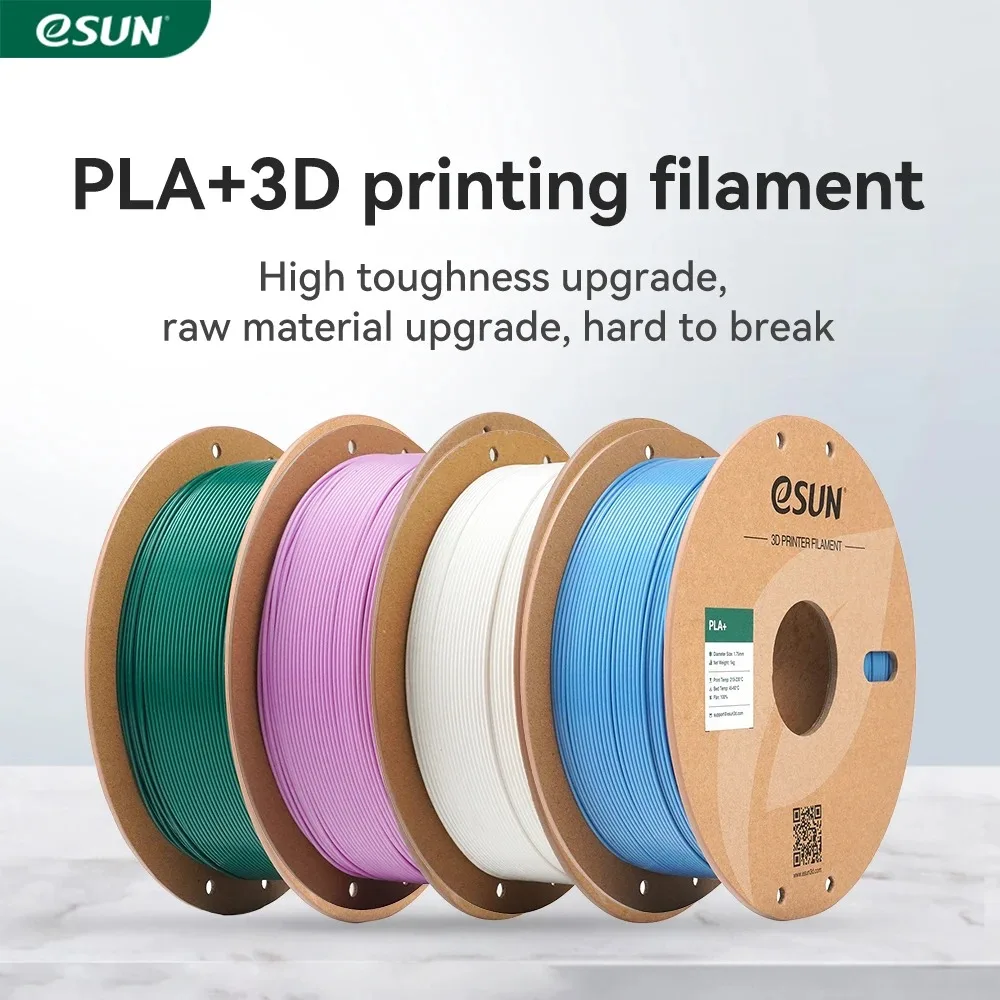
Why PLA filament choice matters
PLA is the first filament most people buy because it is easy to print, widely supported, and suitable for everyday models, prototypes, figures, organizers, and decorative parts. The challenge is that most PLA listings look similar: 1.75 mm, one kilogram, many colors, and a temperature range printed on the spool. A better buying decision comes from checking the diameter your printer uses, the finish you want, the spool format, and whether the part needs strength, heat resistance, or only a clean surface.
For adjacent compatibility checks, compare this guide with PLA vs PETG vs ABS: Which 3D Printer Filament Should You Buy? and 3D Printer Nozzle Buying Guide: Diameter, Thread, and Material before choosing a final product.
Start with these PLA specs
Use these values before comparing color or price.
Shop PLA filament and related 3D printer parts
Start with PLA filament diameter, not color
The most important compatibility check is filament diameter. Most consumer FDM printers use 1.75 mm filament, while a smaller group of older or larger-format machines use 2.85 mm. Do not guess from the spool photo. Check the printer manual, the old filament label, or the slicer profile before buying. A 2.85 mm spool will not feed correctly through a printer built for 1.75 mm filament, and forcing the wrong diameter can cause jams before the filament ever reaches the hotend.
After diameter, check the spool format. Some compact printers, enclosed printers, AMS-style systems, and dry boxes have limits on spool width, outer diameter, and hub size. A standard one-kilogram spool usually works on open spool holders, but not every spool fits every multi-material feeder. If you use a dry box or filament changer, confirm spool dimensions before ordering multiple colors.
Choose the right PLA type for the job
Standard PLA is a safe choice for visual models, draft prototypes, organizers, toys for display, and general household prints that will not sit in a hot car or near a heat source. PLA+ is usually positioned as a tougher or more impact-resistant version of PLA, though the exact formula changes by brand. Silk PLA is chosen for shiny decorative prints, but it can be less forgiving for functional parts. Matte PLA hides layer lines well and is useful for clean-looking display pieces. High-speed PLA is designed for faster machines, but it still needs a matching slicer profile and cooling setup.
If the part will carry load, sit outdoors, handle heat, or flex repeatedly, PLA may not be the right material. PETG, ABS, ASA, nylon, or carbon-fiber filled materials may be better, but those materials usually require different temperature ranges, build surfaces, enclosures, or hardened nozzles. PLA is excellent because it is predictable; it is not excellent at everything.
PLA print settings are a buying signal
A useful filament listing should show nozzle temperature, bed temperature, filament diameter, spool weight, net weight, and recommended speed range. These numbers do not guarantee perfect results, but they help you compare products and decide whether the filament fits your current setup. If your printer has an all-metal hotend and strong part cooling, it may handle a broader range of PLA blends. If your printer is basic and open-frame, standard PLA or PLA+ is usually easier to dial in.
Color also affects expectations. Black, white, and gray are common for test prints and functional prototypes because they photograph well and hide minor color variation. Silk, rainbow, glow, marble, and wood-style PLA are more decorative. Some specialty filaments can be more abrasive or more brittle, so check whether the supplier recommends a larger nozzle or a hardened nozzle.
PLA filament storage matters more than most buyers expect
PLA is less moisture-sensitive than nylon, but it can still absorb enough water to cause popping sounds, rough surfaces, stringing, and weak layers. If a spool arrives vacuum-sealed with a desiccant pack, keep it sealed until you need it. After opening, store it in a resealable bag, dry box, or sealed container. If you print slowly and one spool stays open for months, moisture control becomes part of the buying decision.
Ruyee Supply uses conservative compatibility language because 3D printer parts often look similar while using different dimensions, thread types, voltages, connectors, and firmware expectations. If a listing does not explicitly confirm your exact printer model, treat it as a candidate and compare the measurements before checkout.
What changes print quality
PLA is forgiving, but moisture and finish still affect the result.
PLA filament buying checklist
- Confirm your printer uses 1.75 mm or 2.85 mm filament.
- Check spool weight, spool width, and hub size if you use a dry box or filament system.
- Match PLA type to the print: standard, PLA+, silk, matte, high-speed, marble, or glow.
- Check recommended nozzle and bed temperatures before checkout.
- Use dry storage if the spool will stay open for more than a few days.
PLA filament mistakes to avoid
- Buying by color only and forgetting filament diameter.
- Using silk PLA for a functional part that needs impact resistance.
- Assuming every one-kilogram spool fits an enclosed feeder or dry box.
- Ignoring storage and blaming the printer for moisture-related stringing.
PLA filament frequently asked questions
Is PLA good for beginners?
Yes. PLA is usually the easiest FDM filament to print and is a good first material for most consumer printers.
Is PLA+ always better than PLA?
Not always. PLA+ may be tougher, but formulas vary. Standard PLA can still be better for simple, clean, low-stress prints.
Do I need a heated bed for PLA?
Many printers use a warm bed for PLA, often around the lower end of the filament maker’s recommended range. Follow your filament and printer guidance.
About this PLA filament guide
Written by: Ruyee Supply Editorial Team. Last updated: September 2026.
Ruyee Supply writes buying guides for 3D printer owners who need practical replacement parts, consumables, and compatibility checks before ordering. We evaluate products by the details buyers can verify before checkout: printer model, part dimensions, material, voltage, connector type, package contents, and supplier listing clarity.
This guide uses conservative compatibility wording. A part may be a good candidate for your printer, but you should still compare the product listing with your printer manual, old part, slicer profile, or manufacturer documentation before purchase.
Sources and further reading
- Bambu Lab Wiki for printer, build plate, and maintenance documentation.
- Creality official blog and support resources for FDM printer parts, nozzles, and maintenance guidance.
- Formlabs Support for resin handling, resin printing, and safety references.
- UltiMaker Support for filament material guidance and FDM printing basics.