Hotend and extruder quick answer
Choose hotend and extruder parts by printer model, mount, heater voltage, thermistor type, connector, heatbreak style, nozzle style, filament size, and firmware expectations.
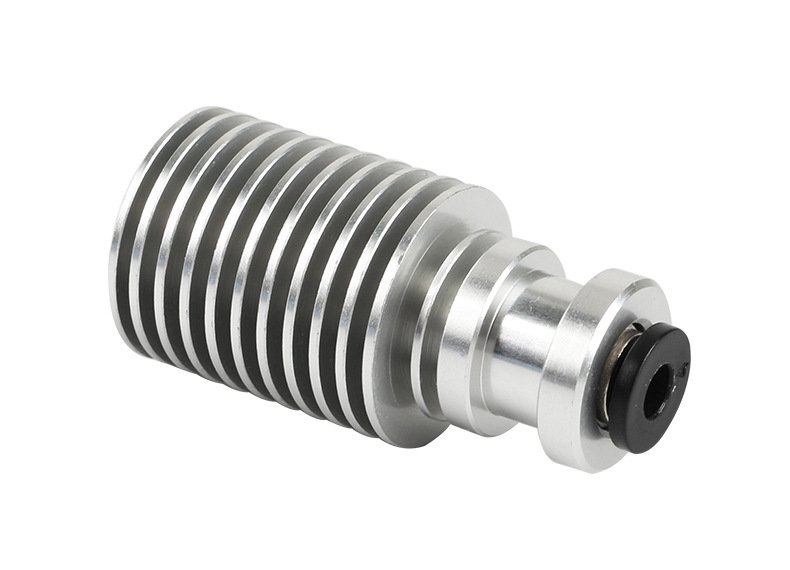
Why hotend and extruder compatibility matters
Hotends and extruders are often listed as upgrade parts, but for most buyers they are replacement parts that need careful matching. A hotend assembly controls melting, temperature sensing, heat isolation, and nozzle mounting. An extruder controls grip and feed force. If either part is mismatched, the printer may under-extrude, clog, overheat, report temperature errors, or fail to mount correctly.
For adjacent compatibility checks, compare this guide with 3D Printer Nozzle Buying Guide: Diameter, Thread, and Material and PTFE Tube and Coupler Buying Guide for Bowden 3D Printers before choosing a final product.
Hotend parts are not one-size-fits-all
Check both the heating system and the mechanical mount.
Shop hotend, extruder, and nozzle parts
A 3D printer hotend is a system, not just a metal block
A hotend may include a heatsink, heatbreak, heater block, heater cartridge, thermistor, nozzle, silicone sock, throat tube, and mounting hardware. Some assemblies are drop-in replacements for a specific printer. Others are generic candidates that need adapters, firmware settings, or wiring changes. Before buying, compare the entire assembly with the old part.
Heater voltage is a critical check. A 12 V heater and a 24 V heater are not interchangeable. Thermistor type and connector style also matter. A connector that looks close in a product photo may not match the printer board. If the listing does not specify voltage and sensor type, ask before buying.
Nozzle style affects hotend maintenance
Some hotends use common MK8 or V6-style nozzles. Others use model-specific quick-swap or integrated nozzle assemblies. A printer may be easier to maintain if common nozzles are available, but proprietary designs can be convenient when they are made for that exact machine. When buying a hotend, think about the next nozzle replacement too.
Heatbreak style also affects performance. PTFE-lined heatbreaks can be easier for standard materials but have temperature limitations. All-metal heatbreaks can handle higher temperatures but may require better tuning to avoid heat creep or clogs with low-temperature materials.
3D printer extruders need mechanical fit and gear compatibility
Extruder parts include drive gears, idler arms, springs, housings, motors, and filament path pieces. A replacement extruder must fit the printer frame or toolhead and line up with the filament path. Direct-drive extruders and Bowden extruders solve different problems. A direct-drive upgrade may improve flexible filament handling, but it changes toolhead weight and sometimes firmware settings.
Check filament diameter, gear type, motor shaft size, connector, cable length, and mount. If the extruder is sold as compatible with a printer series, still check your exact model and revision.
Firmware and safety are part of the decision
Some replacement hotends and extruders are mechanical swaps. Others require PID tuning, E-step calibration, temperature limit changes, or firmware support. If you are not comfortable changing firmware, choose parts marketed as direct replacements for your exact printer. For heated components, never guess wiring or voltage.
Ruyee Supply uses conservative compatibility language because 3D printer parts often look similar while using different dimensions, thread types, voltages, connectors, and firmware expectations. If a listing does not explicitly confirm your exact printer model, treat it as a candidate and compare the measurements before checkout.
Extruder checks before ordering
Feeding problems can come from gears, tension, tubing, or alignment.
How to use this hotend and extruder guide before checkout
Use this guide as a final filter before you add a product to the cart. Start with the printer or resin system you own, then compare the listing against the actual part you are replacing or the material you already use successfully. The best listing is not always the one with the lowest price; it is the one that makes the key dimensions, material, voltage, connector, size, or handling requirement easy to verify.
If you are buying a consumable, check the storage and use conditions as carefully as the product name. If you are buying a replacement part, compare the old part with the photos and specifications. For many 3D printer categories, one missing measurement can turn a good-looking product into the wrong product. When a product page does not answer an important fit question, choose a more specific listing or contact support before ordering.
For repeat purchases, save the confirmed specification after the first successful order. That makes future replacements faster and reduces the chance of mixing similar-looking parts from different printer families.
Hotend and extruder buying checklist
- Confirm printer model and toolhead/hotend mount.
- Check heater voltage, thermistor type, connector, and cable length.
- Match nozzle style and filament diameter.
- Compare heatbreak style: PTFE-lined or all-metal.
- Check whether firmware tuning or E-step calibration is required.
Hotend and extruder mistakes to avoid
- Buying a hotend by appearance only.
- Mixing 12 V and 24 V heater parts.
- Ignoring connector differences.
- Assuming an upgrade kit is a drop-in replacement.
Hotend and extruder frequently asked questions
Can I replace only the nozzle instead of the hotend?
Often yes, if the hotend itself is not damaged. Replace the full hotend when the heatbreak, heater block, sensor, or mount is the issue.
Is all-metal always better?
Not always. All-metal hotends support higher temperatures but may need more tuning for low-temperature materials.
Do extruder upgrades need calibration?
Often yes. Gear ratio or drive geometry changes may require E-step or flow calibration.
About this hotend and extruder guide
Written by: Ruyee Supply Editorial Team. Last updated: September 2026.
Ruyee Supply writes buying guides for 3D printer owners who need practical replacement parts, consumables, and compatibility checks before ordering. We evaluate products by the details buyers can verify before checkout: printer model, part dimensions, material, voltage, connector type, package contents, and supplier listing clarity.
This guide uses conservative compatibility wording. A part may be a good candidate for your printer, but you should still compare the product listing with your printer manual, old part, slicer profile, or manufacturer documentation before purchase.
Sources and further reading
- Bambu Lab Wiki for printer, build plate, and maintenance documentation.
- Creality official blog and support resources for FDM printer parts, nozzles, and maintenance guidance.
- Formlabs Support for resin handling, resin printing, and safety references.
- UltiMaker Support for filament material guidance and FDM printing basics.